Candidature YC de Guardian RF
Guardian RF a été sélectionné par Y Combinator dans le cadre du batch Summer 2024 en tant qu'entreprise Industrials. Ci-dessous : ce que fait l'entreprise, qui l'a fondée, et sa candidature à YC, reconstruite question par question dans le vrai formulaire YC.
- Batch YC
- Summer 2024
- Secteur d'activité
- IndustrialsDrones
- Taille de l'équipe
- 15
- Statut
- Active
- Lancé
- 2024
Fondateurs
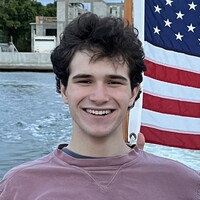 Lucas RaskinFounder
 John AndrzejewskiFounder
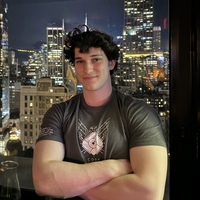 Eli KersteinFounder
Ce que fait Guardian RF
The rise of low-cost commercial drones has introduced a new class of asymmetric threats to U.S. national security. Off-the-shelf platforms now deliver ISR, contraband, or payloads with precision, while operating below radar coverage and beyond line-of-sight. These systems - often costing under $1,000 - are capable of neutralizing multi-million-dollar defense assets. For drone detection to be viable at scale, sensors must achieve cost parity with the threat. In response, the Department of Defense established multiple initiatives to counter the rapid proliferation of uncrewed aerial systems. The Joint Counter-small UAS Office (JCO) coordinates policy and acquisition across services. The Base Defense Cross-Functional Team enables persistent perimeter security for CONUS and OCONUS installations. Falcon Peak, Red Sands, and related exercises are accelerating deployment of counter-UAS technologies in complex environments. This threat is no longer exclusive to military operations overseas. It now directly targets the U.S. homeland. In 2025, an executive order designated the protection of American airspace sovereignty a national priority, recognizing that uncrewed systems present both surveillance and kinetic risks within the United States. That same year, a domestic extremist plotted to destroy a Tennessee power substation using a drone rigged with C-4 explosives - a plan disrupted by undercover federal agents. In July 2025, an unauthorized drone collided with a rescue helicopter during disaster response operations in Kerr County, Texas, forcing an emergency landing and halting flood relief efforts. These are not isolated incidents - they reflect a broader shift in drone-enabled threats against homeland infrastructure and public safety. Guardian RF builds passive, radiofrequency-based drone detection systems for force protection and critical infrastructure defense inside the United States. Our systems are fielded under an AFWERX Direct-to-Phase-II SBIR with the 30th Security Forces Squadron at Vandenberg Space Force Base, deployed by local and state law enforcement, and integrated into commercial security operations. We were selected as a finalist for Falcon Peak 25.2, the Department of Defense’s premier counter-UAS exercise. Scout is a passive RF sensor for fixed, mobile, or temporary deployments. It detects and classifies drone control signals - including modified variants of DJI, Crossfire, and ExpressLRS - at standoff ranges. Scout supports direct integration into TAK and other operational APIs and is managed through GRF-SECURE, our secure interface for live monitoring, threat alerting, and forensic review. Mosaic extends coverage in austere environments, enabling persistent low-altitude monitoring and classification of non - Remote ID drones across complex terrain - without active emissions or mesh dependency. Built in the United States, Guardian RF delivers scalable, automated, and cost-aligned drone detection - passive by design and hardened for real-world deployment across the homeland.
Candidature YC de Guardian RF, reconstruite
Candidature Y Combinator
Guardian RF, promotion Summer 2024. Les vraies questions de candidature, répondues à partir de données publiques.
- Founders2
- Company7
- Progress7
- Idea4
- Equity3
- Curious2
- Batch Preference1
Company
Guardian RF
Drone detection for US defense and national security
We build passive radiofrequency drone detection systems for force protection and critical infrastructure defense. Our products Scout and Mosaic detect and classify drone control signals at standoff ranges without active emissions. They integrate with operational APIs like TAK and provide secure monitoring through GRF-SECURE. Our tech focuses on persistent, automated detection of low-cost commercial drones that threaten US national security.
We don't have a fixed location listed publicly; the company operates remotely or from flexible locations. After YC, we'd base in the US to stay close to DoD and law enforcement customers.
The US homeland is our primary market, and proximity to defense and law enforcement agencies is crucial for sales and support. That's why we'd locate where it enables those relationships post-YC.
21 réponses supplémentaires dans la candidature complète
se trouvent dans la version complète. Créez un compte gratuit pour l'ouvrir dans YC Insights, à côté de tous les autres batches YC.
Questions fréquemment posées
Est-ce la vraie candidature YC de Guardian RF ?
Non. Y Combinator garde les candidatures soumises privées. Ceci est une reconstruction : les vraies questions du formulaire YC, répondues à partir des données publiques de Guardian RF (notes de lancement, parcours des fondateurs, description du produit). Cela montre comment une entreprise comme Guardian RF se présenterait à YC, pas le texte qu'ils ont soumis.
À quel batch YC Guardian RF appartenait-il ?
Guardian RF faisait partie du batch Summer 2024 de Y Combinator.
Qui a fondé Guardian RF ?
Guardian RF a été fondé par Lucas Raskin, John Andrzejewski, Eli Kerstein.
Que fait Guardian RF ?
Drone detection for US defense and national security
Comment lire la candidature complète reconstruite ?
Créez un compte Round Funded gratuit. La version complète de la candidature de Guardian RF en 26 réponses, et de chaque autre promotion YC, se trouve dans YC Insights.
Plus de startups YC comme Guardian RF